June 1, 2026
We are almost halfway through the year, which is usually the point where operations people start doing one of two things:
- Panic quietly.
- Or refocus properly.
Sometimes both before lunch.
It’s a strange point in the year, because there is still enough time to make meaningful progress, but also enough of the year behind us to realise that some plans may not be where we hoped they would be by now. The projects that looked perfectly manageable in January may now be sitting in a very different reality. Teams are stretched. Priorities have shifted. A few “quick things” have quietly become bigger than expected. And somewhere in the background, the year-end deadline starts waving at you like an unhelpful little goblin.
In operations, this can start to feel a bit like being on a runaway train. Everything is moving, people are busy, decisions are being made, and work is happening. But movement and progress are not always the same thing.
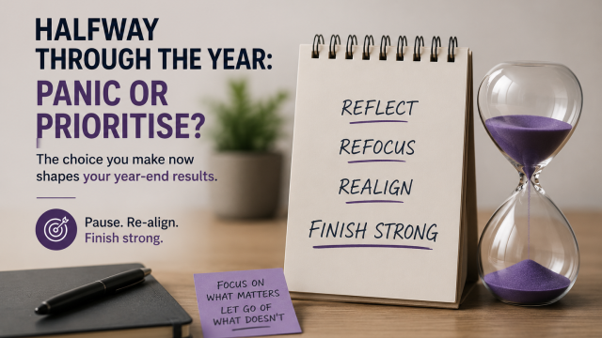
This is where a mid-year operational pause can be incredibly useful.
Nothing dramatic. Not a full strategy session with 47 slides and a room full of pastries. Just a proper pause to look honestly at what is still realistic, what still matters, and what needs to be adjusted before the rest of the year disappears in a blur.
There is good reason to do this. Harvard Business Review has written about initiative overload and how too many competing projects can slow execution and blur strategic priorities. Gallup’s 2026 State of the Global Workplace report also found global employee engagement fell to 20% in 2025, with low engagement linked to significant productivity loss. And McKinsey has long pointed out that many transformations fail because organisations struggle with engagement, execution, and sustaining change over time. So if your operational plans are starting to feel heavy, messy, or slightly out of control, you are in very crowded company.
The useful question is not “Why are we not further along?”
The useful question is “What now needs our attention most?”
Some plans for 2026 may still be completely valid, but need sharper focus. Some may need to be pushed out, because the business does not have the capacity, timing, or resources to do them properly right now. And some may need to be reconsidered altogether, not because they were bad ideas, but because they no longer fit the business reality sitting in front of you.
That can be difficult to accept, especially in operations, where we often feel responsible for keeping everything moving. But sometimes the most responsible thing you can do is stop trying to force all the plans through the same narrow doorway.
A mid-year review is not about admitting defeat. It is about protecting execution.
It gives you the chance to separate what is urgent from what is important, what is still aligned from what is simply still on the list, and what genuinely needs to happen this year from what has just been carried forward because nobody has had the heart to kill it yet.
And yes, that part can be brutal. Some projects need to be retired with dignity. Maybe even a small ceremony. Nothing excessive. Just a quiet thank you for your service and a firm move to the archive folder.
But the real value sits in creating clarity again.
What are the few operational priorities that will make the biggest difference before year-end? Who owns them? What needs to stop or slow down to make space for them? Where are teams carrying too much? Which processes are starting to drift? Which decisions are waiting for leadership? What needs to be simplified before it becomes another operational knot that someone has to untangle in November?
Slowing down at this point in the year can feel counterintuitive, especially when the train is already moving. But slowing down just enough to realign can work in your favour. It can prevent the rest of the year from becoming a long list of half-finished intentions and exhausted people.
So perhaps this is a good moment to take a breath, look at the operational reality without flinching, and make a few deliberate decisions:
- Keep what matters.
- Push out what can wait.
- Drop what no longer serves the business.
Then tackle the rest of the year with a bit more focus, a bit more honesty, and hopefully slightly less runaway train energy.
How are you approaching mid-year operational planning in your business?